

As school counselors, you can help children develop the skills necessary to manage their emotions. This blog post will explore various activities and strategies to help elementary students build essential self-regulation skills. From simple mindfulness scripts to positive self-talk, we’ll dive into counseling activities you can start using today.
Build a Coping Skills Toolbox
Building an individualized ‘coping skills toolbox’ enables elementary students to find strategies that work best for them and develop the self-awareness to know when to use them.
This can be done by trying different strategies and figuring out your triggers. By actively participating in building their toolbox, students will own a strategy as they discover which works best for them. They will also understand that what works for one person may not work for another.
You can have students build a figurative or physical toolbox for this activity. Small plastic pencil boxes work great; you can add fidgets, putty, mindfulness prompts, and drawing materials.
Calming Strategies Lesson
A small group calming strategies lesson where students will explore 24 different coping skills that will help improve their self-regulation.

Calming Strategies Notebook
Like the toolbox activity, creating a calming strategies notebook allows elementary students to try different strategies, reflect on their effectiveness, and assemble a personalized notebook of activities.


Use Mindfulness Scripts
Mindfulness is a powerful intervention that can help elementary students self-regulate their thoughts and feelings. Mindfulness activities can be simple and creative, benefiting even young learners. Children can learn to stay present and notice changes in their emotional state by engaging in mindful practices such as breathing exercises and meditation. With regular practice, mindfulness can become an invaluable tool for managing stress and helping students of all ages stay balanced.
Download these mindfulness scripts.

Build Your Feelings Vocabulary
Building a feelings vocabulary helps children identify and express emotions. But, of course, you have to name it to tame it!
By providing a wide range of words to choose from, students learn to recognize the nuances between different emotions. This helps them gain insight into the scope of their feelings and gives them the words to explain them.
Use your office decor purposefully with feelings posters to help students reference different feelings. It is also helpful to note body language and facial expressions to see how each feeling shows up physically.
Track Feelings
Feelings trackers are an effective way to help elementary students gain more self-awareness. By recording their emotions and the situations they occur, kids learn to recognize patterns over time and establish what makes them feel specific ways. They can then use this newfound knowledge to develop strategies to prevent or calm big feelings.
Feelings trackers also give kids a visual representation of their experiences, which can be especially helpful for those who struggle to verbalize their feelings or remember them accurately.

Perspective-Taking Scenario Cards
Perspective-taking is an essential aspect of self-regulation, and using real-life scenarios can help children better understand others’ thoughts and feelings. Use familiar scenarios to encourage kids to think about how decisions or behavior can impact another person. This gives them insight into how a situation might look from different angles and shows them that their views may be correct only sometimes.
With a better understanding of others' perspectives, students can learn to consider the consequences of their actions and develop empathy toward those around them.
Use simple scenarios or pictures to prompt students to consider everyone’s thoughts, feelings, and reasons for their actions.

Explore Goals with a SWOT
Setting goals can help you better direct your actions and be more aware. You may be familiar with a SWOT analysis. If you are, you might need help to see how it would be involved in a counseling activity for elementary students. Stay with me.
SWOT stands for Strengths, Weaknesses, Opportunities, and Threats. By conducting a SWOT analysis, students can identify their strengths and areas for development. SWOT analyses also help students identify potential sources of stress in their lives, such as specific subjects or activities, allowing them to make informed decisions about how best to manage them. Overall, a SWOT analysis can provide students with helpful information to better understand themselves and make positive changes to practice successful self-regulation.
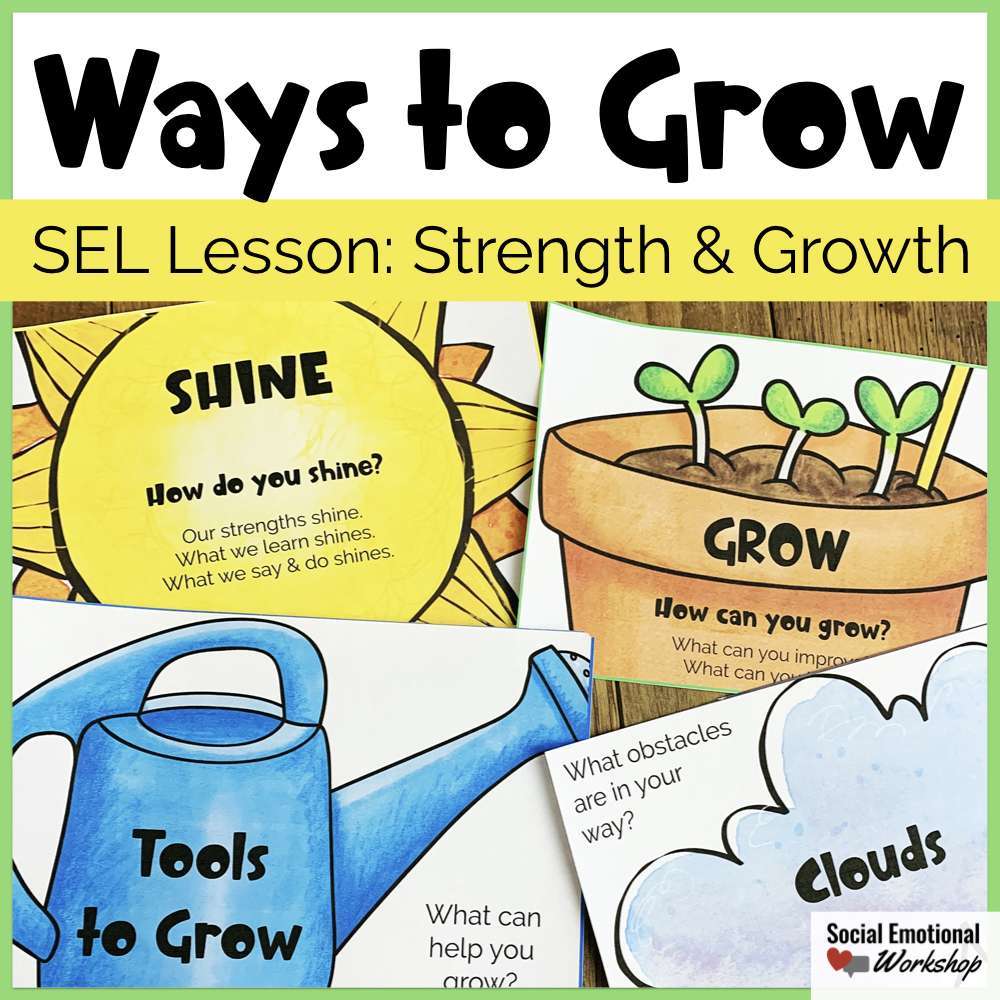
So, let’s translate for elementary students. We will use the concepts of Shine, Grow, Tools, and Clouds.
- The ways you shine are your strengths.
- The ways you can grow will be your weaknesses.
- Tools will be the opportunities you have to grow.
- Clouds will be the threats or obstacles to your growth.

Wish to Success
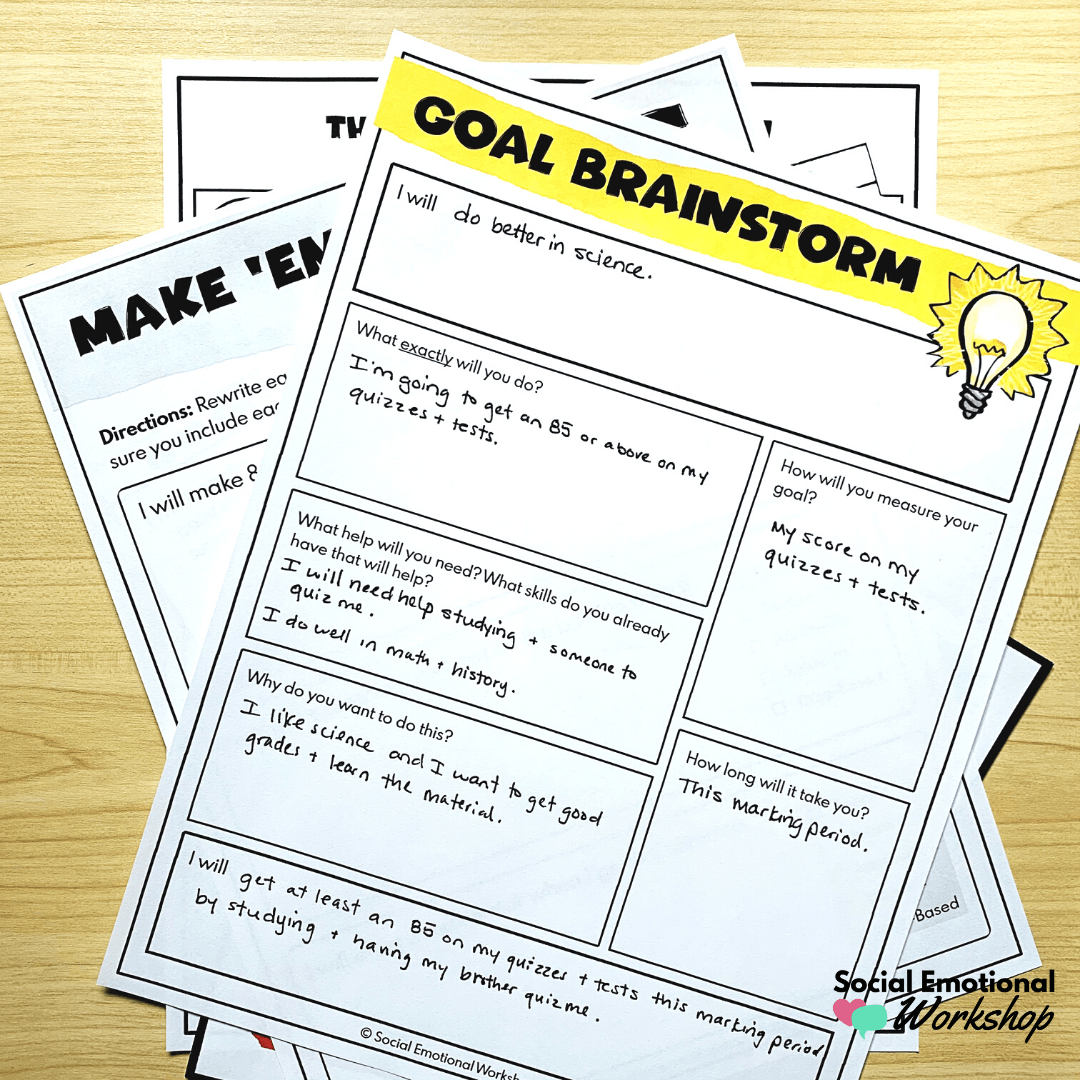
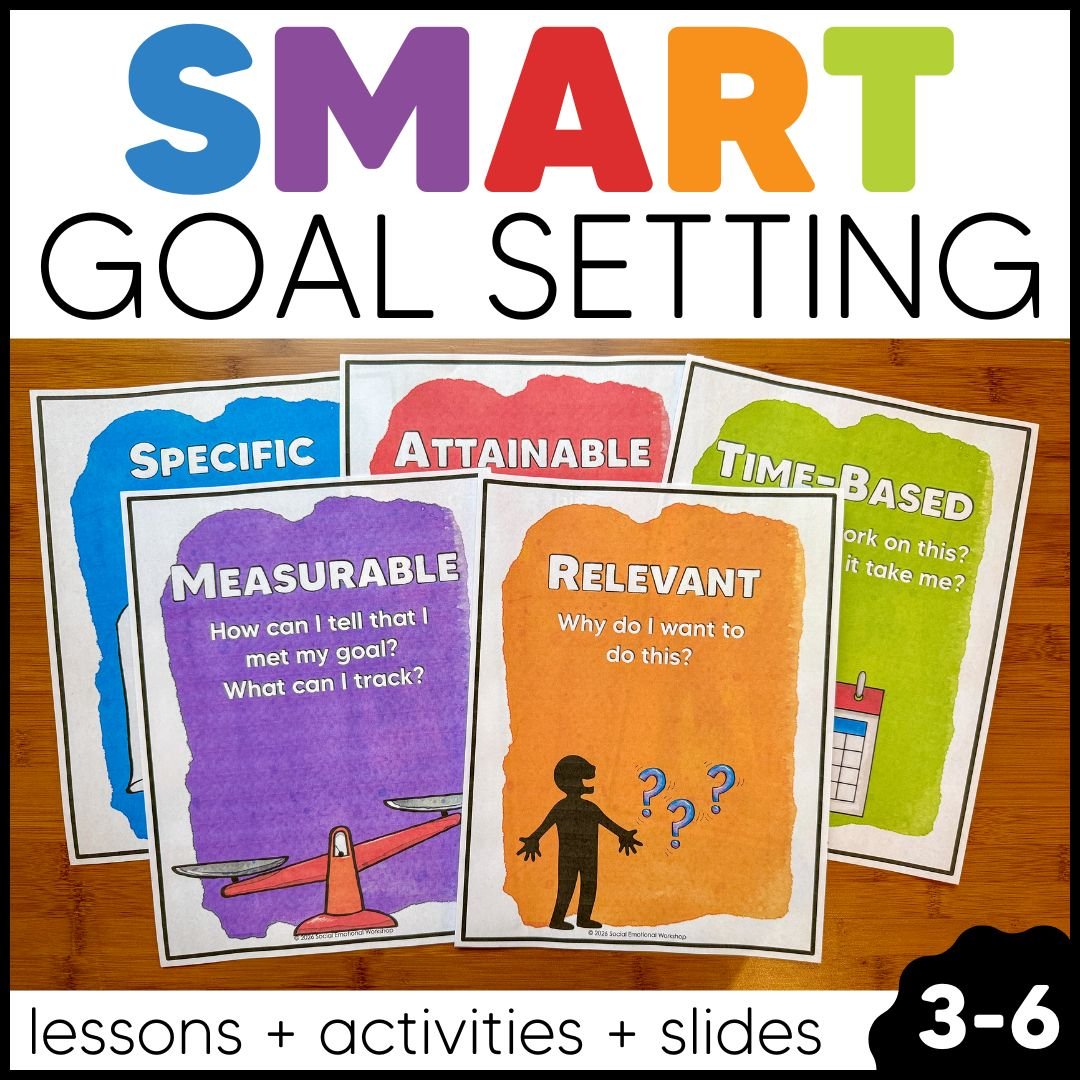
Another way to use goal setting is to teach students how to start with a wish and break it down step by step. Creating a plan is an effective self-regulation strategy that will keep students accountable and motivated.
Positive Self-Talk Umbrella
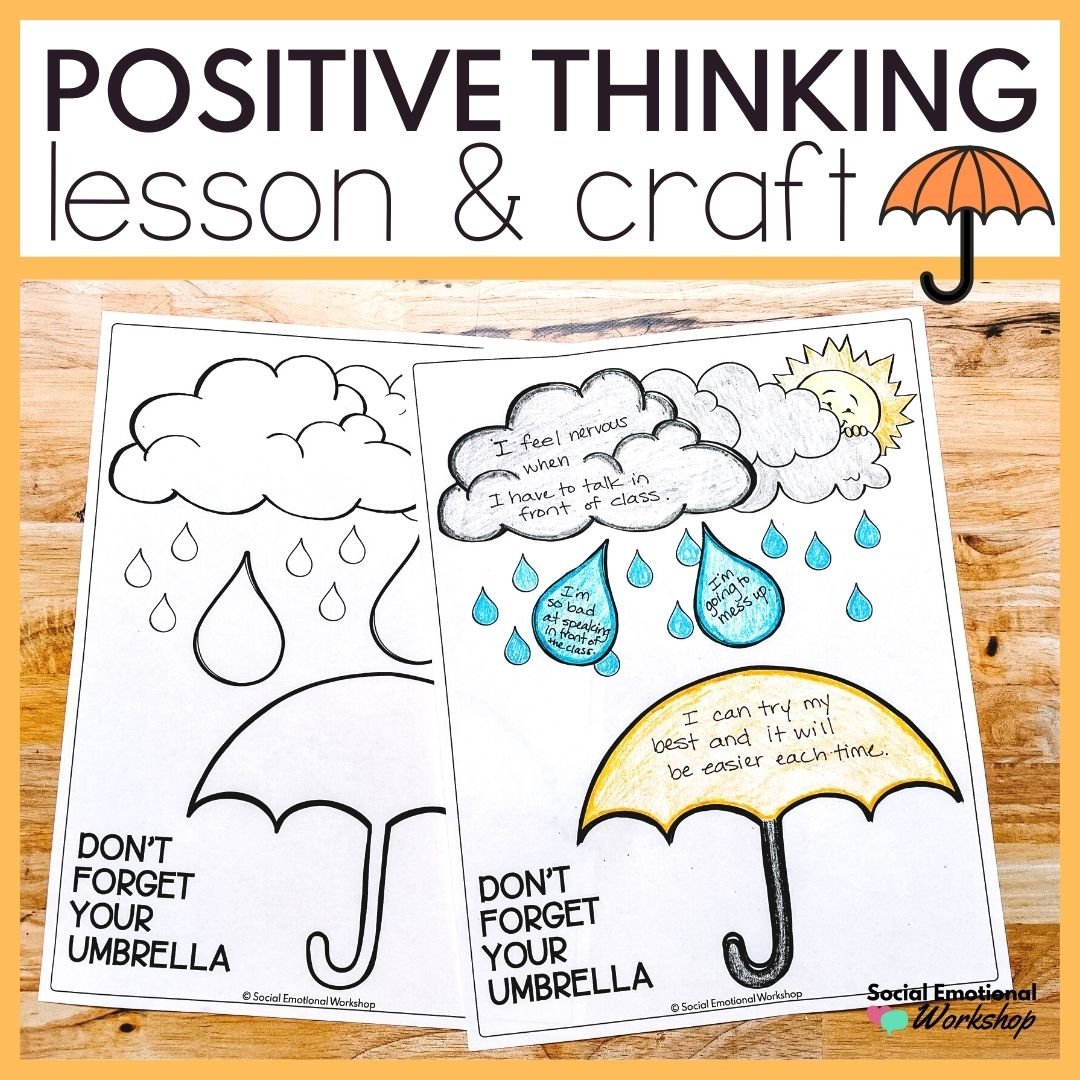
Elementary students can benefit from learning positive self-talk to support self-regulation. Teaching the importance of speaking kindly and positively to yourself helps them reframe negative thoughts into more optimistic ones. Encouraging them to think “I can” rather than “I cannot” helps foster a mindset that sets them up for success.
Positive affirmations can give them the confidence necessary to stick with something. In addition, positive self-talk can help alleviate stress and anxiety by providing a sense of control and fighting overwhelm.
This activity guides students in creating a self-talk phrase to cope with a stressful situation. Positive self-talk is viewed as a tool, just like an umbrella in the rain.

Talking to Your Negative Thoughts
Positive self-talk is a great tool, but sometimes students need more strategies to combat relentless negative thoughts. Reframing their thoughts is a helpful tool for managing negative dialogue; this involves taking what was once a negative thought or sentiment and turning it into something more constructive. Setting realistic expectations for themselves can also help counteract negative thinking, as it reinforces the notion that small successes are just as significant as more substantial accomplishments.
Step-by-Step Problem-Solving Maps
Teaching students a step-by-step problem-solving process is a crucial self-regulation skill. The process helps equip children to understand and manage their feelings, identify strategies for resolving issues, and take action. This skill is essential for making good decisions and forming strong peer connections. In addition, it equips them to think critically about difficult situations and explore potential solutions to achieve the best outcome.
Try using something visual, like a problem-solving map.
What I Can Control - Putty and Rocks
This counseling activity is designed to help children understand what they can and cannot control.
Grab a few rocks and a tub of putty. Explain to the student how you can’t change the shape of the rock. It’s hard, unmoving. But you can easily change the putty and shape it however you want.
Tell them to think about a problem they have had recently. There are aspects of that problem that they can’t change or control. But then, there are other parts that they can.
What part of my problem is like a rock, and what part is like putty?
For example, the student has a test coming up and is very worried. The test is a rock. The student can’t stop or change the test. However, the student can control how they prepare for the test. The preparation is putty.

The rocks represent what the child cannot control, such as other people’s behavior or natural disasters. The putty represents things the child can control, such as their behavior or how they react to a situation.
This activity can help children feel more empowered and in control of their lives when they realize they can influence and change many things.
Self-regulation skills are essential for children to be successful and make good decisions. The activities outlined in this blog post provide a variety of strategies for teaching skills such as positive self-talk, reframing negative thoughts, setting realistic expectations, creating problem-solving maps, and understanding what’s within their control. With practice, these strategies become second nature and foster healthy emotional development that sets kids up for success throughout their lives!
Shop the Post

Self Regulation Bundle
A bundle of 7 lessons, 3 games, and supporting materials. Materials cover coping skills, emotional awareness, problem solving, goal setting, assertive communication, and behavior change.

Self Regulation Tools
Get 5 self regulation and social emotional learning tools you can use daily with elementary students. This includes an interactive calm corner, brain breaks, yoga cards, feelings posters, and reflection sheets.