

Scaling tools are one of those low-prep strategies that can do a lot of heavy lifting in counseling sessions. They give students a way to notice the range of their experiences. Whether that’s how strong a feeling is, how big a problem seems, or how much progress they’ve made toward a goal. Instead of seeing things as all-or-nothing, scaling helps kids identify the in-betweens: what triggers their reactions, which strategies work (and when), and how their choices shift their outcomes.
And for counselors, scaling tools are flexible enough to use with just about any problem that comes through the door: anger, anxiety, motivation, friendship issues, or self-control. You name it, and a scaling tool should be one of your ready-to-go counseling resources.
Why Scaling Tools Work
Scaling is a foundation for students to see progress, understand their feelings, use strategies effectively, and set goals.
In Solution-Focused Brief Therapy (SFBT), scaling questions are a core technique. Traditionally, therapists use a 1–10 scale to help clients identify progress, coping ability, or confidence. For example:
- “On a scale of 1–10, where are you today?”
- “What would get you one number higher?”
Scaling shifts the focus from the problem to small, achievable steps forward.
We can turn this idea into a concrete and visual concept for kids. With younger students, a 1–5 scale is usually more manageable than a 1–10 scale. There are many ways to use scaling.
- Emotional awareness: How strong is the feeling?
- Problem-solving: How big is the issue?
- Coping: How confident are you in handling this?
- Progress: How close are you to your goal?
Because you can revisit them again and again, scaling tools become a shared framework, not just an activity.
Adapting Scaling for Elementary Students
Younger kids often need simpler, more concrete visuals. That’s why shorter scales (like 1–5) work best.
There’s also research supporting the integration of scaling with play therapy techniques. Using figurines or characters to represent points on the scale helps students embody and understand it. For example:
- Eeyore = low/slow feelings
- Pooh = middle, steady feelings
- Tigger = high energy or intense feelings
These playful metaphors make scaling more accessible, especially for kids still developing emotional vocabulary.
6 Scaling Tools to Try
Some tools work best for measuring feelings in the moment. Others are designed to track progress toward goals or confidence in handling a problem. Together, they provide a flexible set of options tailored to various counseling needs.
1. Thermometer 🌡️
A counseling classic. Students rate using a thermometer visual.
- Gives a clear visual of how intense a feeling is.
- Easy to pair with coping strategies at different “levels.”
- Can also be used to measure progress toward a goal or confidence in coping skills (e.g., “On the thermometer, how confident are you that you can handle this next time?”).
- Works for individual sessions or small groups.
👉 Check out A Feelings Thermometer Is the Ultimate Counseling Tool for examples and ways to use it in counseling.
Try saying:
“Where are you on the thermometer right now. What does it look like when you move up on the thermometer? What helps you come down?”
“On the thermometer, where would you put your confidence in solving this problem? What would move you up a notch?”

2. Fist to Five ✋
Quick and no-prep! Students use their hand to show their level (fist = 0, five fingers = max).
- Perfect for one-on-one sessions or small groups.
- Works well for both feelings and confidence (“How ready are you to try this on your own?”).
- Helps track progress across a session: “You started at a 4—where are you now?”
Try saying:
“Show me with your hand how big this feels. A fist means calm, five means furious.”
Or: “How confident are you right now? Show me with your hand.”
3. Weather Report ☀️🌧️🌪️
Students pick a weather condition that matches their feelings: sunny, cloudy, stormy, etc.
- A playful, concrete metaphor that works well with elementary students.
- Although not technically scaling, you could customize it for different emotions. Stormy for anger, foggy for confusion, sunshine for happiness, tornado for out of control.
- Can also be used for progress: “If sunny means you’ve reached your goal and foggy means you’re still on the way, what’s your weather today?”
Try saying: “If your feelings were today’s weather, what would they be? What changes the forecast for you?”

4. Speedometer 🚦
Instead of temperature, students use a speed gauge.
- Helps them see that strong feelings don’t shift instantly—you can’t slam the brakes from 80 to 20.
- Teaches that behavior should match the setting (recess might be 60 mph, quiet work is 20 mph).
- Can also track readiness or progress: “How fast are you moving toward your goal?”
- Easy DIY: draw a semi-circle, add notches, and attach an arrow with a brad or paperclip.
👉 Download a blank speedometer visual to use with your students.
Try saying: “Where’s your speed right now? If you’re at 80, what helps you slow down to 40?”

5. Size of the Problem ⚖️
Students rate a problem by how “big” or “heavy” it feels.
- Encourages perspective-taking: Is this a small problem I can handle myself, or a big one where I need help?
- Connects naturally to problem-solving steps and choosing appropriate strategies.
- Can also be used for resilience: “Even if this is a big problem, how confident are you that you can carry some of it?”
Try saying: “How heavy is this problem? Is it like carrying a backpack, or is it more like lifting a boulder?”
6. The Ladder 🪜
A classic SFBT tool, the ladder focuses on progress toward goals. Students place themselves on a step to show where they are and where they’d like to be.
- Builds hope by emphasizing movement and growth.
- Encourages students to identify “the next step” instead of trying to leap to the top.
- Can be used for emotional goals (“How calm do you feel?”), skill-based ones (“How ready are you to try this strategy on your own?”), or progress toward bigger goals.
Try saying: “What step are you on right now? What would it take to move up one step?”

Ways to Use Scaling Tools
Scaling tools aren’t just for quick ratings; they can become part of your counseling routine.
- Session check-ins and check-outs: Start or end with a scale rating.
- During conflict resolution: Pause and ask, “Where are you right now?”
- Tracking progress: Compare ratings over time to show growth.
- Teaching coping skills: Match strategies to different levels of intensity.
- Small group work: Use a shared tool like fist to five so everyone can check in together.
- Goal setting: “Let’s see if you can move from a two to a three before you leave today.”
Scaling tools are quick wins: easy to introduce, endlessly adaptable, and powerful for helping students see that feelings, problems, and progress all live on a spectrum. Try one new tool this week and see how it changes the conversation.
Do you use scaling tools in your counseling sessions? Share what you do below!
Resources In This Post
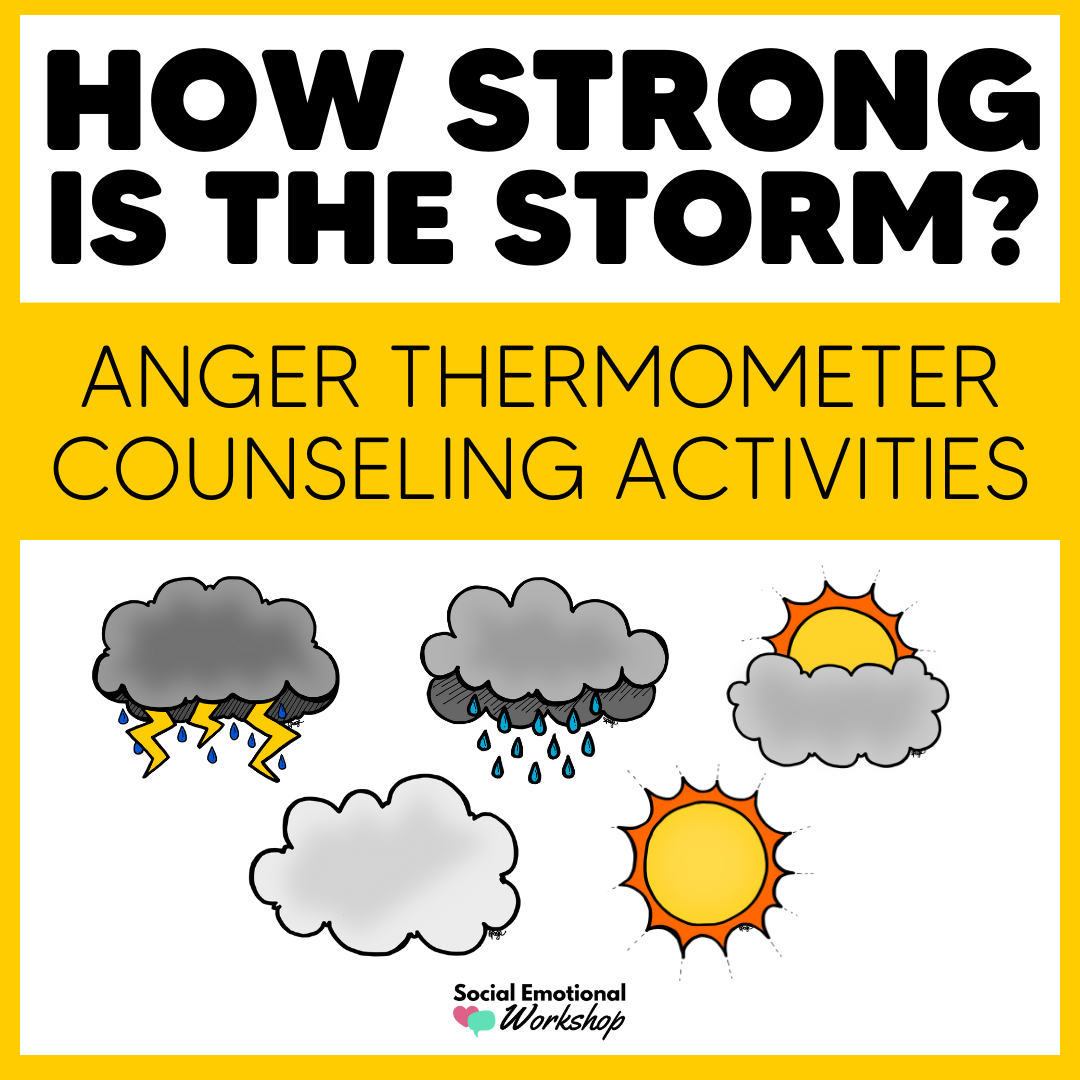
Anger Thermometer Counseling Lesson
Anger management counseling activities using a storm theme and anger thermometer to help students understand and manage their big feelings! Packed with an easy-to-use session plan, printable anger worksheets, and bonus activities.

Motivation Small Group Counseling Curriculum
Comprehensive 12-session small group counseling curriculum. This ready-to-use group addresses the root causes of low motivation through research-proven strategies targeting the skills that build autonomy, belonging, and competence