

Every school counselor is familiar with this scenario: a referral lands on your desk for a student who seems disengaged: missing homework, daydreaming in class, or avoiding participation altogether. When you meet with them, their responses are minimal, full of shrugs, or they seem unsure how to begin addressing the problem.
It can be disheartening to see a student stuck in this cycle because, as a counselor, you want to help, but finding the right starting point or determining what will truly make a difference can feel like an uphill battle.
Here’s the key: low motivation isn’t rooted in laziness or apathy. It’s often a signal that one or more core psychological needs (the need to feel competent, the need to belong, and the need for autonomy) aren’t being met. Without these, a student’s motivation can dwindle.
But here’s the good news: as a school counselor, you have the tools, the empathy, and the expertise to address these needs in a way that can reignite that spark. By incorporating research-backed strategies focused on competence, belonging, and autonomy, you can help students rediscover their drive. Let’s take a closer look.
What Research Tells Us About Motivation
Extensive research, including a meta-analysis of over 150 studies, confirms that intrinsic motivation, motivation driven by internal factors, is powered by three fundamental psychological needs:
- Competence: Students need to feel capable of success. When they believe they can overcome challenges and see tangible progress, they’re more likely to stay engaged.
- Belonging: Feeling connected to others, whether it’s peers, teachers, or counselors, is essential for resilience and persistence.
- Autonomy: Students thrive when they feel a sense of control over their decisions. Making meaningful choices allows them to take ownership of their outcomes.
Studies consistently show that when these needs are met, students are not only more motivated but also more likely to thrive academically and emotionally. As a school counselor, you’re in a unique position to address these foundational needs and inspire growth through thoughtful and targeted interventions.
The Approach: Skills + Mindset + Environment
The solution for fostering motivation is a three-pronged approach:
- Build Skills: Directly teach students concrete abilities that foster feelings of competence, belonging, and autonomy.
- Shift Mindsets: Help students reframe their thinking about challenges, effort, and failure to foster a growth-oriented perspective.
- Adjust the Environment: Collaborate with teachers and families to create settings that naturally support students’ core psychological needs.
This systematic approach moves beyond surface-level interventions, addressing the root causes to create lasting change.
Core Counseling Sessions: Flexible Backbone
- Rapport Building: An introductory session to build connection, trust, and introduce the counseling process.
- Psychoeducation: A session where the student learns about the topic or skill being addressed (e.g., how motivation works, what a growth mindset is).
- Goal Setting: Teaching students how to set personal, meaningful goals. This is a key skill that can be revisited and integrated throughout subsequent sessions.
- Skill Practice/Integration: Dedicated sessions for practicing and applying the skills students are learning. This is often where the bulk of your work will happen.
- Termination: A final session to recognize their growth, celebrate successes, and plan for continued progress and maintenance of skills after counseling ends.
In the middle, you work on the lagging skills that are causing issues for the student. In the case of motivation, we have 8 core skills that help address unmet needs.
8 Skills for Building Motivation
Each of these eight teachable skill areas directly supports competence, belonging, or autonomy.
- Goal Setting - Break down overwhelming tasks
- Self-Reflection - Recognize strengths and growth
- Self-Advocacy - Express needs respectfully
- Communication - Build relationships
- Decision Making - Practice choices
- Strategy Use - Has tools when stuck
- Resilience - Bounce back from setbacks
- Connection to Purpose - Link learning to values
Done For You Motivation Group
12 Session Group Counseling Curriculum: Based on research and focused on skills.

1. Goal Setting
Helps students break down tasks, take ownership, and reflect on their own growth.
Strategies
- Teach SMART goals in kid-friendly language.
- Personal best vs perfection.
- Connecting goals to their interests.
- Break big steps into next steps.

Try: A Goal Ladder
Draw a ladder and have students write a big goal at the top. Write where they are starting at the bottom. Break the goals into smaller steps and write them on each rung. They can see progress as they climb their ladder. This creates a self-defined measure of success.
More on Goal Setting
Habit Stacking: A Quick Goal Setting Strategy Kids Can Use
11 Simple Strategies to Help Elementary Students Achieve Goals
2. Self-Reflection
Builds awareness of strengths, patterns, and growth.
Strategies
- Effort Tracking (“What did I try today?”)
- Before/after work comparisons
- Growth documentation
- Connect efforts and outcomes.
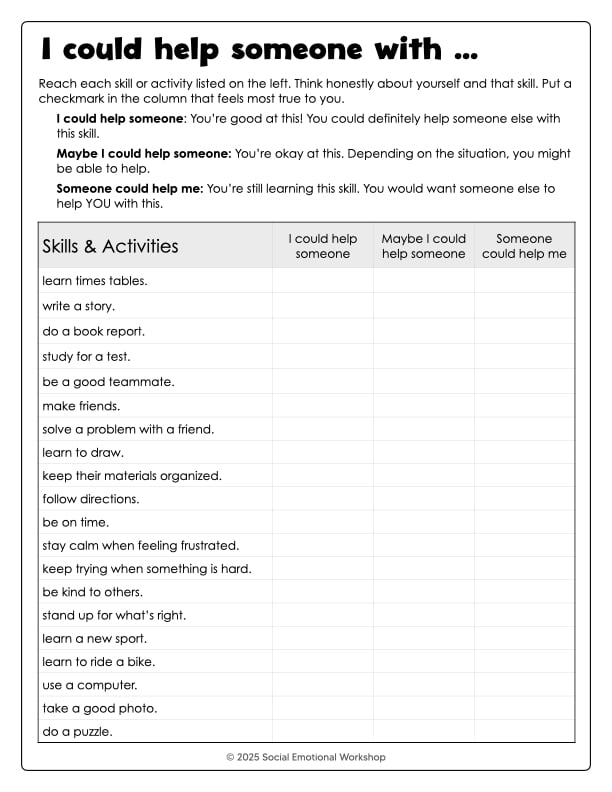
Try: A Strengths Survey
Come up with a list of activities or skills (e.g., riding a bike, writing a story, following directions, making friends, etc). Students check off whether they could help someone with it or would need someone to help them. Focusing on what they could help someone else with makes it easier to talk about their strengths.
3. Self-Advocacy
Empowers students to express needs and lean into supports.
Strategies
- Practice specific phrases and sentence stems.
- Role-play scenarios and plan for challenges.
- Identify who supports them and with what.
- Awareness of when to ask.
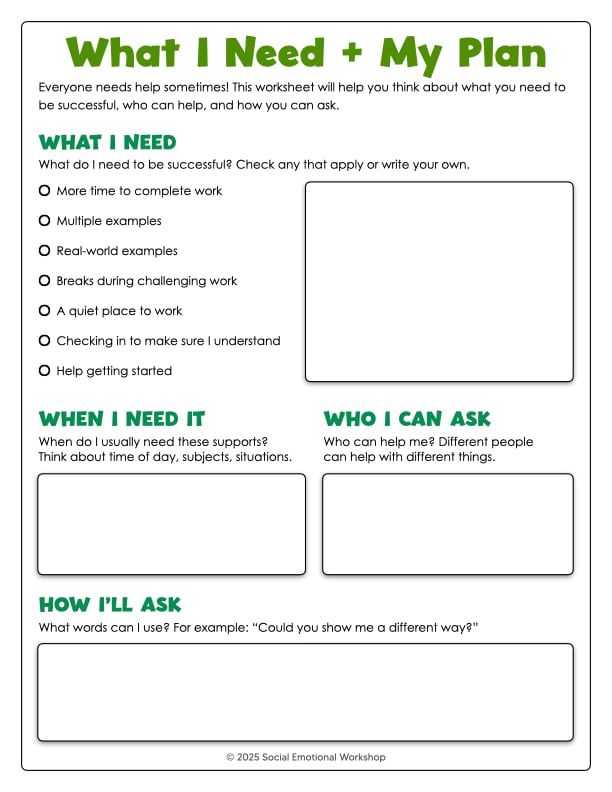
Try: What I Need and My Plan Worksheet
Students identify what they need to be successful, when they need these supports, who they can ask for this help, and how they can ask.
More on Self Advocacy
4. Communication
Helping students build and strengthen positive relationships with peers and adults.
Strategies
- Social skills practice in natural situations
- Find communities where they feel valued
- Focus on how they can contribute
- Practice active listening
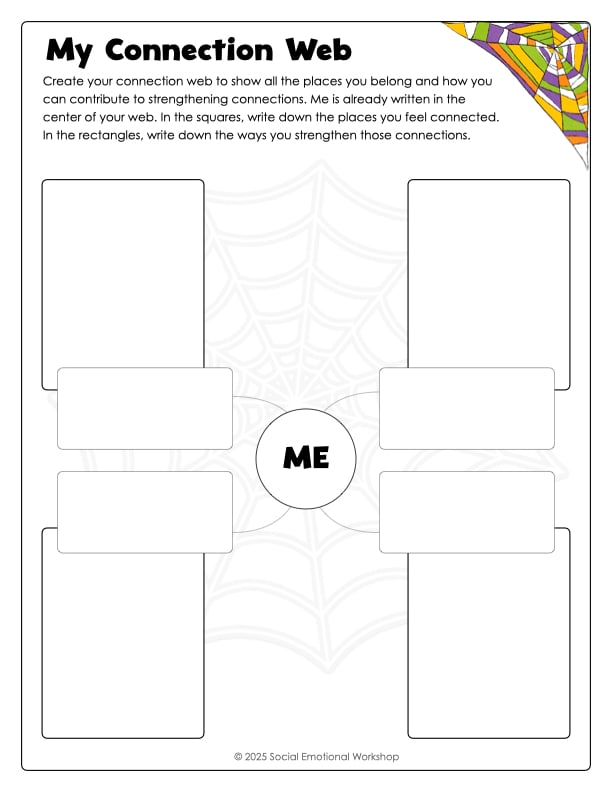
Try: A Connection Web
Students map their relationships, identify where they feel connected, and ways they can strengthen connections.
More on Communication
5. Decision-Making
Builds autonomy and confidence in handling challenges.
Strategies
- Practice with low-stakes problems
- Teach pause and think
- Brainstorm alternatives
- Map out consequences
- Predict problems
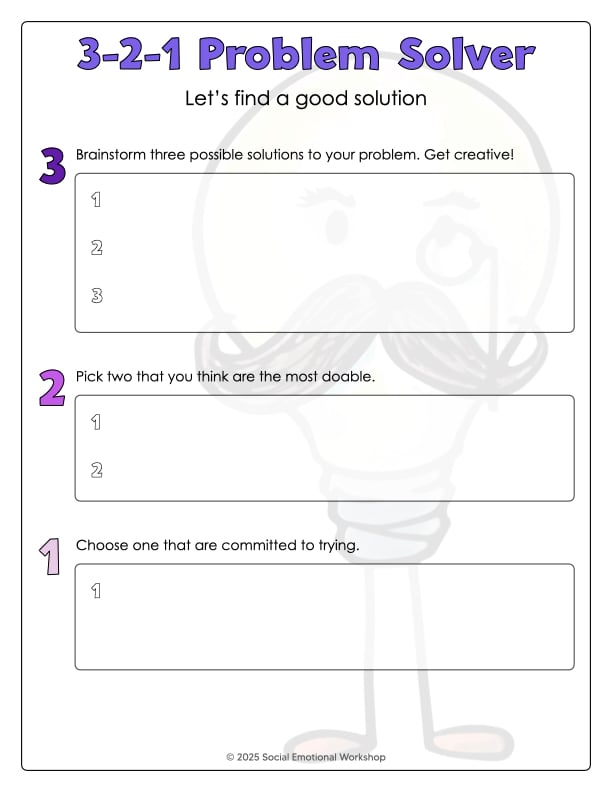
Try: 3 - 2 - 1 Problem Solver
For any problem: 3 possible solutions, 2 they are willing to try, and 1 they will start with.
6. Strategy Use
Provides multiple approaches for getting unstuck and moving forward.
Strategies
- Teach metacognition
- Experiment with different strategies
- Have backup strategies
- Find the strategies that work for them
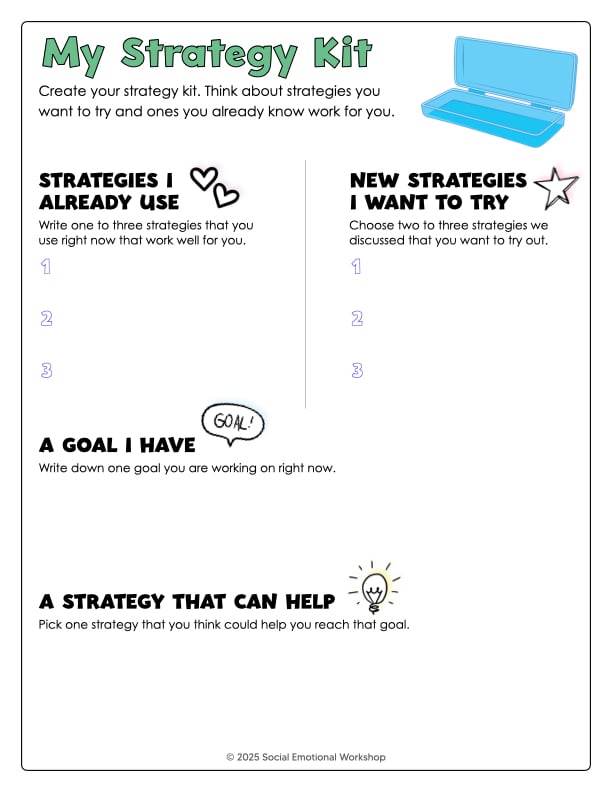
Try: My Strategy Kit
Students collect approaches for when they’re stuck that work the best for them. For example, break it down, start with the easiest part, use a timer, talk it through, and follow the “just do something” rule.
7. Resilience
Help students bounce back from setbacks.
Strategies
- Practice reframing
- Recognize effort
- Document growth over time
- Practice persisting with challenging tasks
Try: Negative Reframing Techniques
“Ugh, but” (Ugh, this is hard, but I think with practice I’ll get it),
“Best Friend’s Eyes” (What would your best friend say?),
“Boss that Thought” (Don’t let negative thoughts be in charge).
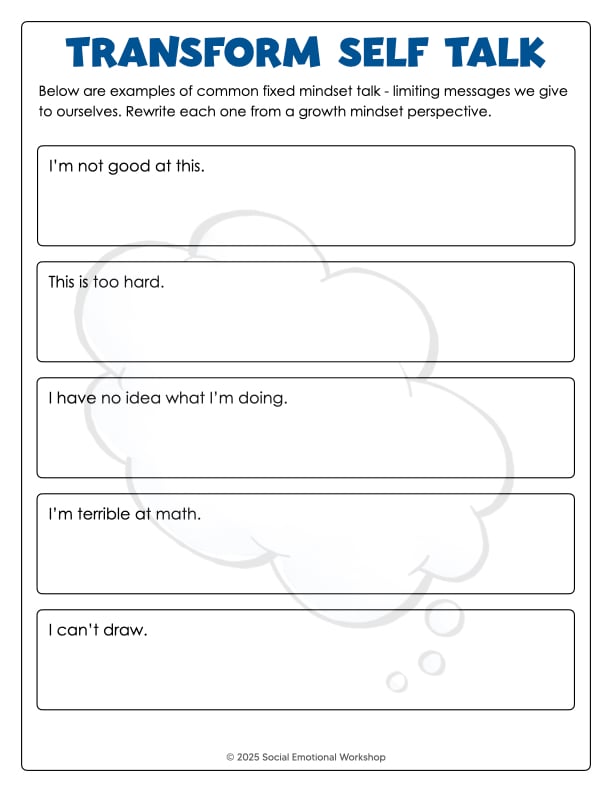
Try: Change Self Talk
Ugh, but: “Ugh, this is hard, but I think with practice I’ll get it.”
Best Friend’s Eyes: What would your best friend say?
Boss that Thought: Don’t let negative thoughts be in charge.
8. Connection to Purpose
Links learning to personal values and meaning.
Strategies
- Explore what matters most to them
- Connect values to interests and passions
- Think about the future
- Find personal relevance

Try: Keep, Toss, Star Values
Take 30 different values (e.g., courage, independence, kindness, etc). Students sort values into keep (important), toss (not important), and star (most important), then use their most important values to help them stay focused and motivated on their learning.
Collaborating with Teachers and Parents
Consistency is key! Share strategies with teachers and parents to reinforce the lessons and tools students are learning in counseling sessions:
For Teachers
Collaborate with teachers to build competence, belonging, and autonomy in the classroom.
- Competence: Provide effort-focused feedback, highlight progress, explore mistakes as learning opportunities, and offer scaffolded challenges with multiple ways to show learning.
- Belonging: Make personal connections, foster community building, implement inclusive practices, and acknowledge cultural responsiveness.
- Autonomy: Offer meaningful choices, solicit student input, practice goal co-creation, and provide ownership opportunities.
- Growth Mindset: Use growth-oriented language (“You haven’t learned this yet”), celebrate productive struggle, and focus on process over product in feedback.
For Parents
Empower families to support motivation at home.
- Competence: Celebrate effort, create opportunities for mastery, and highlight progress.
- Belonging: Schedule one-on-one time, engage in family traditions, and ask about school relationships.
- Autonomy: Offer age-appropriate choices, let them plan activities, and include them in problem-solving.
- Mindset: Model a growth mindset, share stories of your own mistakes, and focus praise on effort and strategy.
- General Support: Show genuine interest in their interests (beyond grades), and frame challenges as opportunities to grow.
School Counselors & Motivation
Motivation is never a one-size-fits-all challenge, but by focusing on competence, belonging, and autonomy, school counselors can help students regain confidence, deepen connections, and take ownership of their success.
Try This Today: Start your next session with a goal-setting activity or a connection web. These small steps can lead to growth for your students.
Resources In This Post
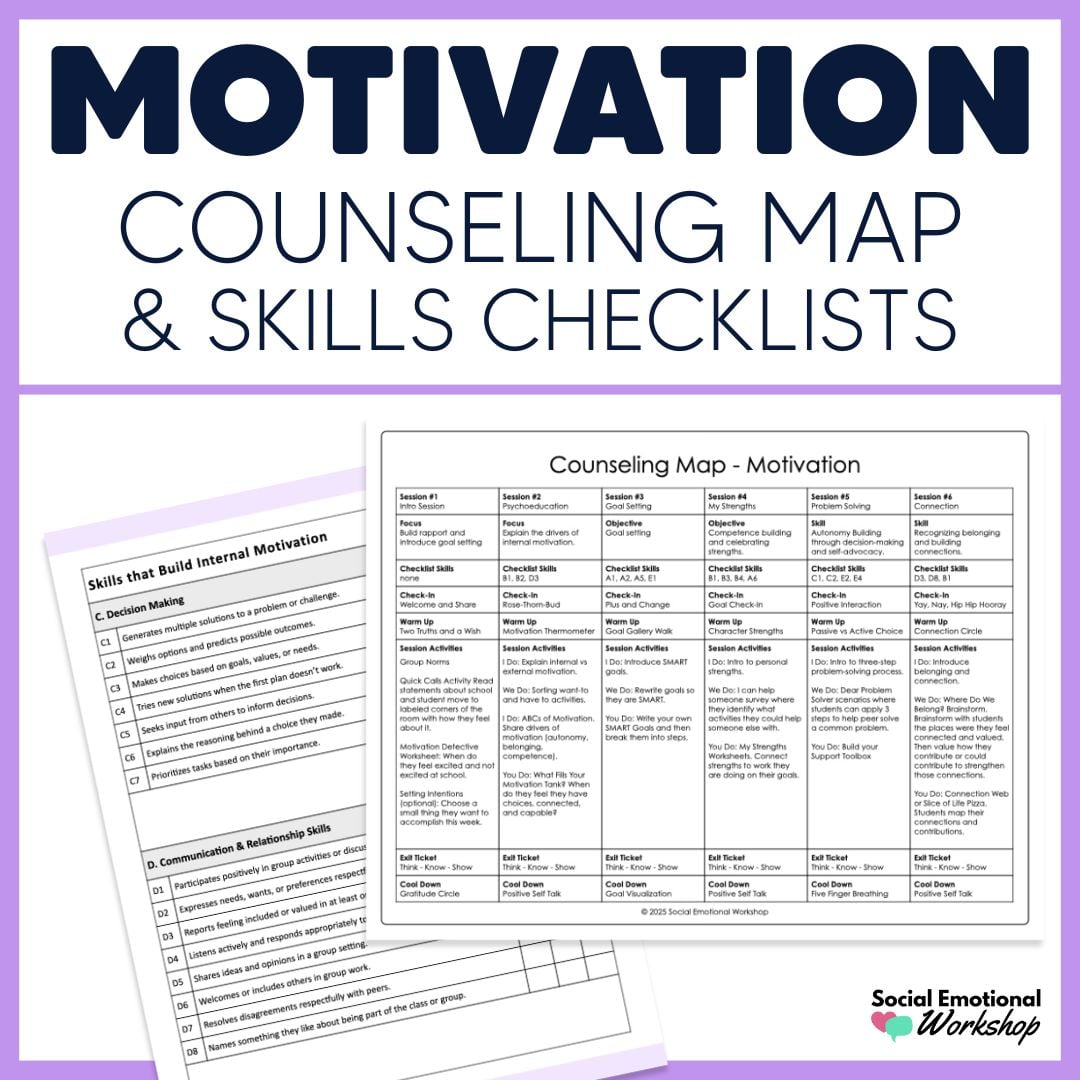
Motivation Counseling Map & Skills Checklist
Skills checklists you can use to determine what skills are lacking and a 12 session counseling map to help you build a responsive counseling plan.
Included in the Motivation Group
Motivation Group - Engine Starters
12 session comprehensive and counseling group. Includes skill checklists, counseling map, 12 detailed sessions, notes to teachers/parents, assessments, and more.
What strategies have worked for you in helping students overcome low motivation? Share what you do below!