

Helping students make thoughtful decisions can feel like an uphill battle. They’re navigating friendships, peer pressure, and a world filled with choices. But here’s the thing: decision-making doesn’t have to feel daunting, for you or for them.
One of the simplest and most empowering ways to teach this skill? Start with personal values. When students know what really matters to them, decisions become less about guesswork and more about using those values as a compass.
It’s a transformative shift and one that can set students up for so many confident, responsible choices in the future.
If you’re starting with personal values, you might want to take a peek at this post first: Discovering Personal Values: A Lesson for Students. It’s a great starting point!
In today’s post, we’ll dive into the next step: connecting those values to decision-making in meaningful activities. Along the way, I’ll share practical tips, creative activities, and ways to adapt these ideas for classrooms, counseling sessions, and even parent discussions.
Let’s start with the basics.
How to Teach Decision-Making Through Personal Values
1. Define Personal Values (in student-friendly terms)
To really get this across, start by breaking down personal values into simple, kid-friendly language. Explain that values are the things we believe are most important. They’re the guiding principles behind how we act.
You could say something like:
- “If you value kindness, you might choose to help someone who’s struggling.”
- “If you value fairness, you probably believe it’s important to treat others equally.”
The key is to ground it in examples that students can picture. Storytelling or famous people work wonders here. Students will better understand values by seeing how they apply them in everyday situations.
Try this Circle-Star-Slash activity to help them identify their values.
2. Connect Values to Decisions
Here’s where we give those values some legs. Explain how they act as a guide, a way to navigate tricky situations by returning to what matters most.
For instance: “If someone pressures you to leave another kid out, and you value fairness, your compass might guide you to include everyone instead.”
To drive it home, invite students to think about a sticky choice they’ve faced before. Ask reflective questions:
- “What choice aligns with your values?”
- “What were the consequences of that choice? Did that match up with what you value?”
- “What value guided the choice you made?”
- “What might’ve been different if you’d ignored that value?”
It feels powerful when students see how their values influence real decisions.
3. Model the Process
Now it’s time to show, not just tell. Share a personal example of when your own values helped you make a decision.
It doesn’t have to be a big, dramatic story; sometimes, the smaller, real-life moments are the most relatable. Walk through your thought process:
“I chose kindness here because it’s one of the values that matters most to me.”
"I chose to not sign up for that class, because I value flexibility and leisure time."
Then let them try. Create space for role-playing scenarios where they can practice identifying their values and making choices.
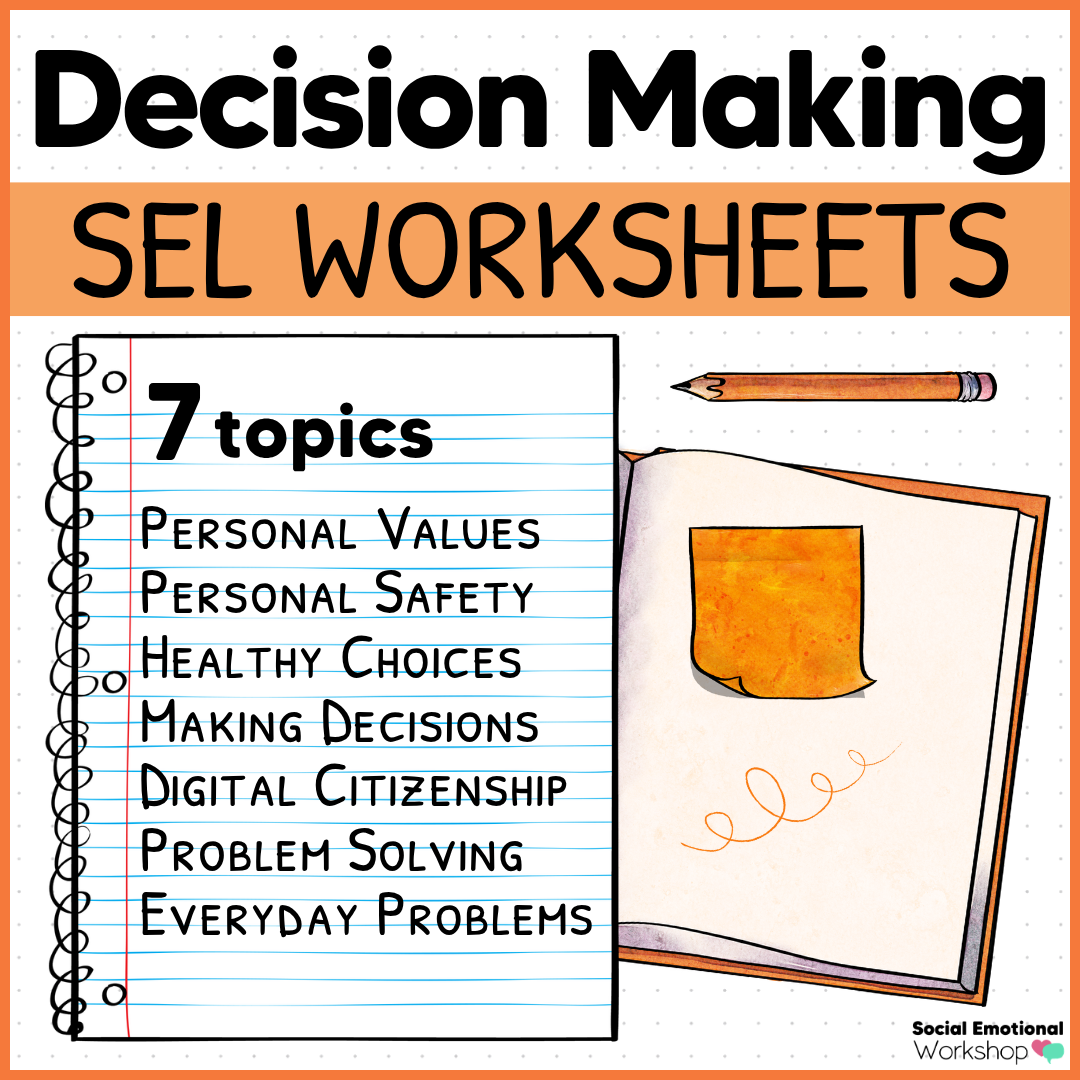
Decision Making SEL Worksheets Bundle
7 topics to help students practice responsible decision making skills.
Engaging Activities for Value-Driven Decision Making
Practical is great, but hands-on and interactive? Even better. Here are a few simple ways to make these concepts really stick:
1. Values in Action Scenarios
Present students with real-world dilemmas like:
- A friend asks you to cheat on a test. How do you respond?
- Someone in your group isn’t contributing. What’s your move?
Ask them to decide what they’d do and then tie their choice back to a personal value. Wrap it up with a group discussion: what happens when different values lead to different decisions?
2. Decision Compass Craft
This one’s perfect for making values something concrete. Have students list four values that guide them most, then decorate a “decision compass” based on those values. They can keep it as a visual reminder for future choices.
3. Values Role Play
Split students into small groups and give each one a scenario. Ask them to act out two versions: one where the character chooses in line with their values, and one where they don't.
Follow it up with a reflection:
- How did the two choices feel different?
- What were the outcomes of each?
4. Personal Values Journaling
Prompt students to reflect on their own experiences with decision-making. Some ideas:
- Think about a time you made a tough decision. What value helped guide you through?
- If you could live by one value a little more, what would it be, and why?
This one’s quiet and reflective, and it works beautifully for building self-awareness.
Personal Values in Different Contexts
One of the best things about anchoring decision-making to values? It’s flexible. Here’s how to tweak the approach based on the setting:
Whole-Class Lessons
Start by brainstorming values together. Create a list as a group: fairness, kindness, honesty, responsibility, and so on. From there, work in smaller groups to develop scenarios in which one of those values comes into play.
Want to make it interactive? Try a decision walk. Each group posts their scenario and solution, and the rest of the class can “visit” and add their thoughts. Cap it off with a classroom-wide discussion or reflect on how different values lead to different decisions.
Individual Counseling
This approach also works well in one-on-one settings. If a student is facing a tough decision, help them identify the values most important to them. Guide them in practicing using those values to choose confidently. You can consider all possible options and then identify the best choice based on what’s important to them.
You could even use tools like a “values card deck,” where students pick their top 3-5 values and apply them to their situation.
Bonus: Create a simple action plan together to make the process feel concrete.
Parent Partnership
Parents play such a huge role in shaping how kids see and connect with their values. Encourage parents to reinforce these ideas at home:
- Share family values openly. (“Our family believes in treating others with kindness.”)
- Model their own decision-making process aloud (“I chose to do this because fairness matters to me.”). Or a time they made a decision that wasn’t in line with their values and how that felt.
- Celebrate their child’s decisions when they reflect positive values.
Wrapping Up
Helping students connect their personal values to their decision-making builds confidence, self-awareness, and a deeper sense of purpose. And when we give them this “compass” to rely on, we’re giving them a lifelong tool to navigate choices in ways that are true to themselves.
Whether you try out one of these activities, adapt the approach for individual counseling, or share it with families at home, I’d love to hear how it goes!
How do you encourage thoughtful decision-making in your classroom, counseling sessions, or even at home? Share your favorite strategies in the comments!
Resources In This Post
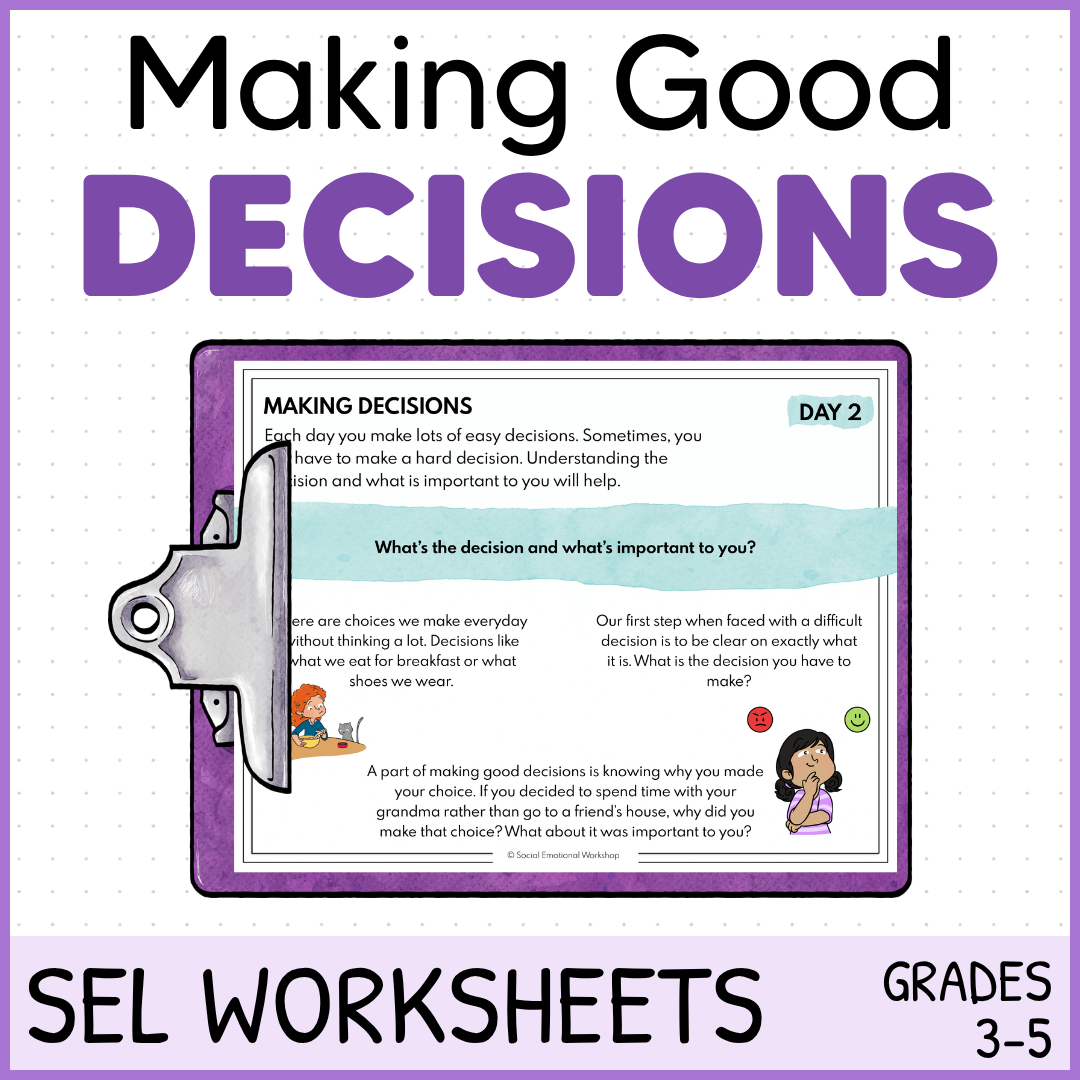
Making Decisions SEL Worksheets
No-prep SEL worksheets for grades 3-5 that teach a simple decision-making process. These print-and-go worksheets help students compare easy and hard decisions, identify their choices, consider the positives and negatives of each option, and decide what to do.
Decision Making Bundle SEL Worksheets
No-prep SEL worksheets that build responsible decision-making and problem-solving skills. This bundle covers 7 topics that help students explore their values, consider personal safety, make healthy choices, think through decisions, practice digital citizenship, and solve common social and school problems.